Nicolas Hulscher, MPH
Study
A newly published peer-reviewed study in Gut Microbes has uncovered a previously unknown cancer-fighting bacterium isolated from amphibian and reptile gut microbiomes—delivering results that exceeded modern oncology treatments.
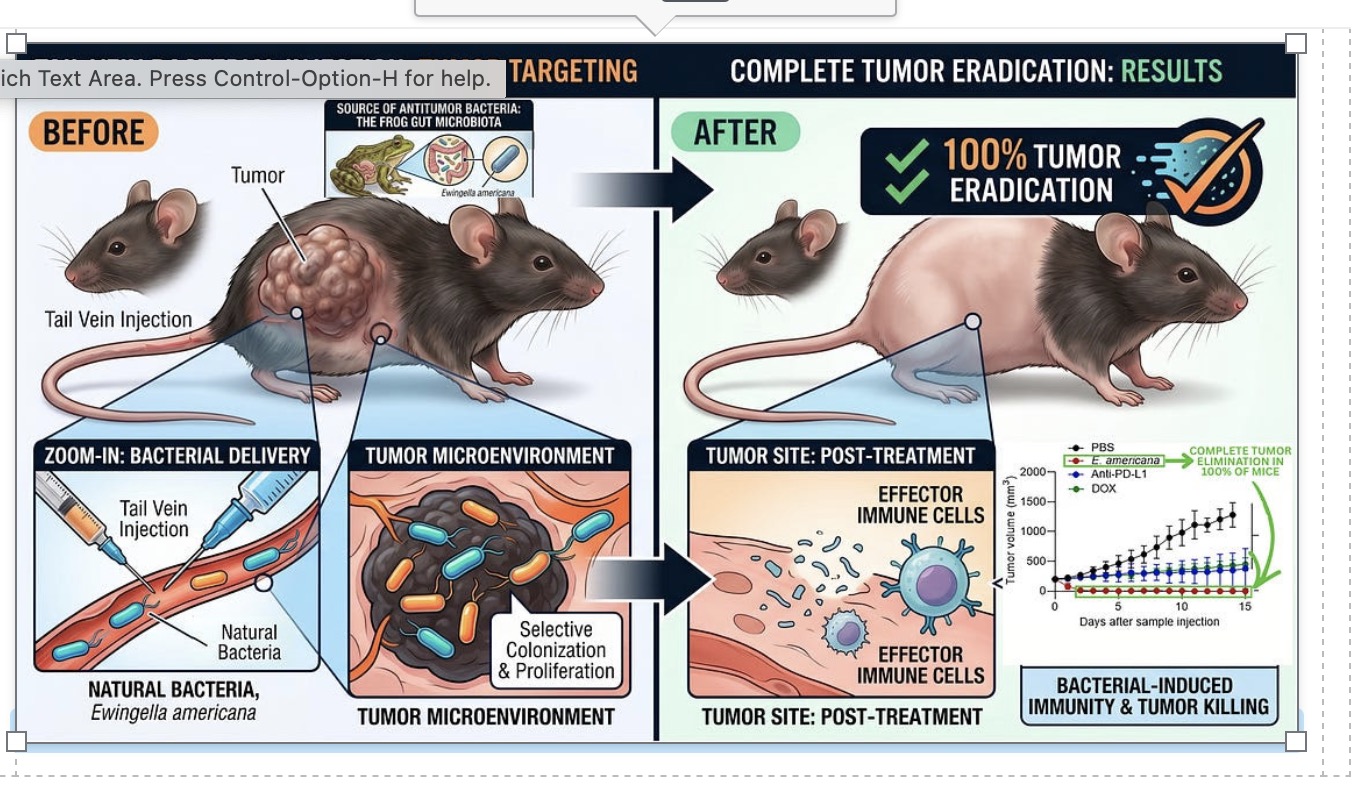
In an immunocompetent mouse model of colorectal cancer, a single intravenous dose of Ewingella americana led to complete tumor elimination in 100% of treated animals, with no recurrence upon re-exposure to cancer cells—suggesting durable, long-term immune protection.
 |
Even more striking, the bacterium outperformed both chemotherapy (doxorubicin, “red devil”) and immune checkpoint blockade (anti–PD-L1)—two pillars of modern cancer therapy.
What makes this discovery particularly compelling is the mechanism. E. americana is not a passive drug—it is a living, tumor-targeting organism. As a facultative anaerobe, it preferentially accumulates within the hypoxic tumor microenvironment, where it rapidly proliferates and exerts direct cytotoxic effects while simultaneously activating a broad immune response. Within hours, tumors become infiltrated with T cells, B cells, and neutrophils, accompanied by surges in key inflammatory cytokines like TNF-α and IFN-γ.
Investigators observed approximately a 3,000-fold increase in bacterial load within tumors within 24 hours, indicating highly efficient tumor homing and intratumoral expansion. This dual-action approach—direct tumor destruction combined with immune activation—distinguishes it fundamentally from conventional therapies, which typically rely on a single mechanism of action.
Equally notable is the safety profile observed in this preclinical model. Despite intravenous administration of live bacteria, treated animals showed no significant weight loss, no detectable organ toxicity, and no abnormalities in hematologic or biochemical parameters. The organism was rapidly cleared from circulation within 24 hours, while remaining selectively localized within tumor tissue—an unusual and highly favorable pharmacokinetic pattern.
Importantly, this was not a genetically engineered construct. E. americana is a naturally occurring bacterium, suggesting that vast, largely unexplored microbial ecosystems—particularly those of non-human species—may harbor powerful therapeutic agents.
While these results remain preclinical and require validation in human trials, the signal is difficult to ignore. A single-dose intervention achieving complete tumor eradication, durable immune memory, and superiority over established therapies represents one of the most striking outcomes reported in recent cancer research.