Some caution? That is both good and bad. It’s good because we can use that to our advantage, like with C60, but bad in that yes, with a little water, C60 becomes nC60, and can kill us. Hence the study.
A major new scientific assessment of crops that have been genetically modified to produce pest-killing poisons has found that insects are rapidly developing resistance to them. Published in the Nature Biotechnology journal by researchers from the University of Arizona in the United States, the study examines 36 cases looking at how insects react to the crops. READ MORE….

UT Southwestern Medical Center researchers have found that intermittent fasting inhibits the development and progression of the most common type of childhood leukemia.
This strategy was not effective, however, in another type of blood cancer that commonly strikes adults.
(Natural News) A medical study conducted at the Ohio State University Wexner Medical Center found that women who received flu vaccines had a weakened immune system response in subsequent years.
Lisa Christian, PhD, the lead researcher on the study, concluded, “Growing evidence shows that those who received a flu shot in the prior year have lower antibody responses in the current year.”
The study proves yet again that the official narrative of the flu shot industry — and its complicit corporate-run media — is false and deliberately deceptive. Far from offering bulletproof protection, flu shots actually make people more vulnerable to influenza infections, which of course contributes to more people catching the flu and then falsely thinking they need more flu shots for “more protection.
People who had a 2008 flu shot experienced a 250% increase in influenza infections in subsequent years.
A study published in Human & Environmental Toxicology found that mercury-laced flu vaccines caused a 4,250 percent increase in fetal deaths during the 2009 flu season.
READ MORE…

Figures show a statistically significant increase in miscarriages when women received their flu shot. The median gestational age for spontaneous abortion was 7 weeks in the affected pregnancies.
Definition: Molecular mimicry is defined as the theoretical possibility that sequence similarities between foreign and self-peptides are sufficient to result in the cross-activation of autoreactive T or B cells by pathogen-derived peptides
The ability of the immune system to distinguish between self and non-self molecules is an important property in maintaining tissue/organism integrity.
Molecular mimicry induced autoimmunity can occur when the non-self and host determinants are similar enough to cross-react, yet different enough to break immunological tolerance.
When high degrees of similarity are present between non-self (vaccine proteins) and self molecules, the breaking of the powerful self-tolerance mechanisms that avoid harmful self-reactivity seems unlikely.
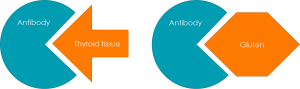 Molecular Mimicry and food allergies
http://www.nutritionqed.com/blog/2015/07/autoimmune-diseases-and-nutrition/
 Now MIT researchers are working on an all-in-one vaccine that would deliver the entire schedule of childhood vaccines in one shot. Read more…
Commentary by Jim Stone Miscarriages Jim Stone
Abstract introductions Inactivated influenza vaccine is recommended in any stage of pregnancy, but evidence of safety in early pregnancy is limited, including for vaccines containing A/H1N1pdm2009 (pH1N1) antigen. We sought to determine if receipt of vaccine containing pH1N1 was associated with spontaneous abortion (SAB)
FULL TEXTCDC spontaneous_abortion_following_second_flu_vaccine_2017
The study says 7.7, for those of you counting at home, that’s not a “hint”, that’s a giant disturbing alarm (which is why the damage control is being rolled out en masse today). Women who had received the two flu shots in successive seasons were almost 8x more likely to have a spontaneous abortion than those who had not — a nearly 700% increase.
Stay tuned for a complete analysis…its worse than it appears!
See: Study by Gary Goldman in the 2009/2010 H1N1pdm2009 year of a 4,250% increase in miscarriages with a double dose of flu vaccine, H1N1 and Seasonal Flu shot.
See: CDC COVER UP of the 2009/2010 miscarriages
CDC vaccine excipients chart

CDC Vaccine Excipient chart pdf (downloadable)
There are items on the list more obfuscated than excipients that are self explanatory like “formaldehyde” such as Mueller’s growth medium…What is that? Here is a link to the details…for example:
What is Modified Mueller and Miller medium?
The procedure involves the use of a variant and somewhat unstable strain of Clostridiium tetani and a culture medium containing a pancreatic digest of casein with additional cystine and tyrosine, beef heart infusion, glucose, and inorganic salts. A high concentration of iron must be provided.